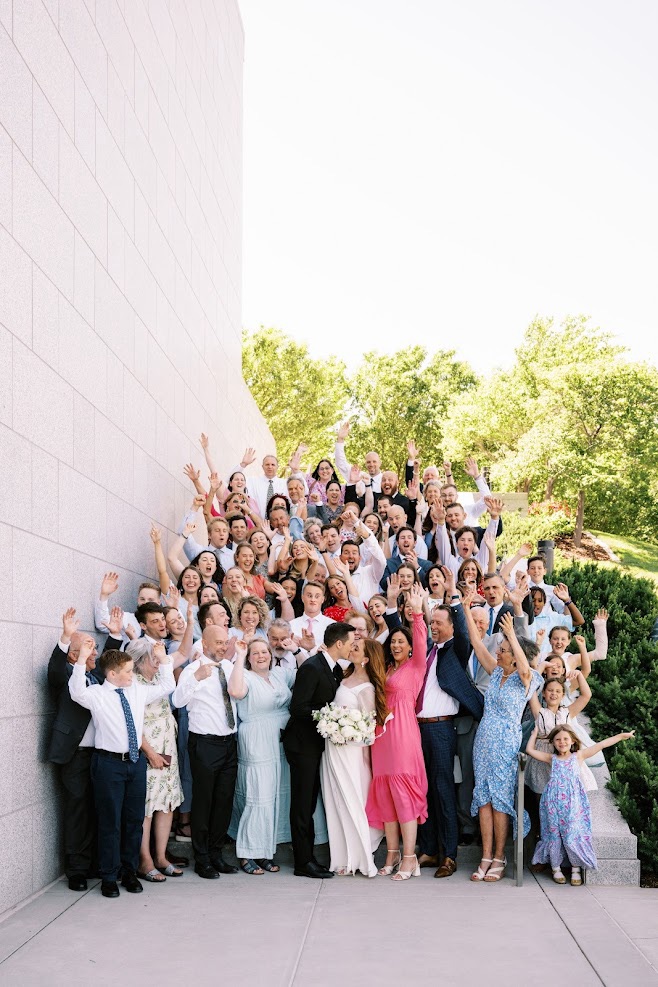
Recently, I have spent many of my quiet personal moments, thinking about Identity. As friends and acquaintances seek more and more publicly to define their Identity, I have felt like something foundational has been pushed aside. I don’t want to discuss all of the potential ways to define your own Identity but I do want to share about the primary role of family in defining individual Identity.
This all started driving back from Rexburg Idaho while talking with my Father in-law about his family. It was so exciting for me to learn more about the Matley family and it sparked so much appreciation for my own family. When I got home, I started thinking more deeply about family while wondering about what makes people feel like they belong. When I think about my life, what makes me feel important? How am I individual and unique? And what gives me purpose? I brainstormed questions like these a bit more and ended up sharing this survey with Facebook (Family). The questions parallel that original conversation with my Father in-law and were meant to help me better understand people’s relationship with family. In the following paragraphs I will share my thoughts by mirroring the pattern of the survey. I will also share responses that helped me to form my thoughts.
- What is your name?
Names have always fascinated me. My name is Jay Aldus Lachlan Simmons. Each of those names has a specific meaning, sometimes they are silly but they have influenced me throughout my life. Names frequently have meaning behind them that is not shared often enough.
- Does your name have any significance to you?
These were some of the wonderful responses I received to this question. One person said “I love having a unique first name – it feels significantly “mine”’, another shared “my mommy named me after her favorite Soap Opera character who she thought was beautiful, kind, smart, and compassionate. It shows me what my mom’s dreams for me were when she was pregnant with me.” These responses show how meaningful names can be to individuals and how a mission or purpose can be conveyed to a child through ownership of that name and the associated qualities of its eponym. I’m not advocating for some extreme names but I do think names can be much more influential than we sometimes think.
- 2-5 Generations ago, who was your family? What did they stand for/represent? What do you view as defining characteristics of this part of your family?
This is the first question that really required some deep thought from the respondents. I was hoping to find how many people knew about their family history, how many people felt connected to it, and what elements of that connection are important. These are some of the answers that felt like the most important to share.
One person shared that “[My family] in general are all very strong in the church, especially a few generations back. Lots of kids, lots of faith, never turn down a calling. I don’t always live up to all that, but that is the general impression I have of my family, especially for older generations”. Another shared “They’re pioneers. Willing to leave behind everything they knew and come to another country to start a life. Willing to accept a new religion that profoundly changed the way their posterity lives.” One shared, “I constantly hear stories of family members going off to war, taking care of the family, building things, working day in and day out for decades.” The last that I will share, said of one of her ancestors “Her determination to seek God even in the most difficult challenges influenced me my whole life”.
This allowed the respondents to think about people that they may not have ever known. For example, I knew my grandparents but I only knew one of my great grandparents and I didn’t know any ancestors beyond that. That means that aside from my grandparents…. My understanding of my family 2-5 generations back was influenced mostly by family reunions, anecdotes from family, and from my own personal research. Connecting with these generations of family requires much more effort at times then connecting with our immediate family. I think that understanding who these people were always provides deeper understanding for your life of who you are and why your family is who it is. Whether you have a traditional family or some variation of a broken home, estranged family members, or ruined relationships… Connecting with and/or understanding ancestors helps make sense of choices and outcomes that have influenced our lives for better or for worse.
- For this generation, (your children and your parents), who is your family? What do they stand for/represent? What do you view as defining characteristics of your family?
This time I am just going to share the responses all at once and then point out some things that I loved.
- “Improving upon what they were given and experienced.”
- “Success through effort. Loyalty to the family. Generosity, sharing what we have”
- “We are not big city people, we like our space. We like to grow things. Some of us don’t socialize much/well, but I need friends outside the family too. We take on ambitious projects and we tend to be pretty good at finding a way to make things happen, though we do bite off too much sometimes.”
- “We aim to look at life with gratitude, hope, and positivity. We value family time and growing our relationships. We value change, improvement, generosity and authenticity.”
- “We are a family who lives our lives in our Savior’s example that we may all be together forever. Defining characteristics are open communication, support, love, guidance, humor, faith, comfort, and The Gospel of Jesus Christ.”
- “I think a defining characteristic would be resilience. This might be a common thing where older generations came from hardship and the younger generations have taken steps into a better life, but my parents have done that without me even really knowing until I found out for myself. My mom and dad, and generations before them have all been through heavy, traumatic experiences but are so humble about how they managed to overcome those obstacles.”
- “We can do hard things. Freedom lovers. Defenders and seekers of truth.”
There are a few things I want to point out with this. First, we are more readily able to critique our immediate family than we are our ancestors. For most people the deeper and more personal connection with their immediate family, allows them to feel safer being constructive with criticisms and shortcomings. Second, as people described their ancestors they talked about what they did and what they meant but as they talked about immediate family they talked more clearly about who they were… they used more descriptive wording and had more defined thoughts about who they were. This progression culminates with the most specific and critical judgment we have of ourselves.
- Which of your own personal character traits do you attribute to your family 2-5 generations back?
For me, understanding who my family is has helped me understand and appreciate which parts of who I am are heavily influenced by my ancestors. These responses highlight that unconscious relationship we all have with our ancestors and can hopefully encourage us to think more about what it means to be who we are and how much of a role our ancestors play in the answer to that question.
- “I think I picked up the desire to make an impact. These people weren’t just living to believe, they were living to achieve, to get things done!”
- “Stubbornness, creativity, willingness to embrace conflict when needed, independence.”
- “Perseverance, steadfastness, an “I can do hard things outlook on life”
- “Creating interpersonal relationships, kindness, forgiveness”
- “Outdoorsy, awkward, arrogance, work ethic, introvertedness, self reliance”
- “Health, intelligence, hard working, testimony of the savior”
Another thing I want to point out is that for most of the people that answered in this survey, this question led to shorter answers and more succinct characteristics. While the group I surveyed may not be representative of the norm, I believe that their responses suggest that we can derive real strength and direction from our ancestors and families. In other words, a core part of knowing who you are is a willingness to understand and/or address who your family is.
- Which of your own personal character traits do you attribute to your parents?
I thought that this question would provide different answers than the question before it but for the most part they were the same. Our great-grandparents gave to our grandparents and our grandparents gave to our parents what our parents gave to us.
- “I think the resilience from my parents has rubbed off on me. My parents showed me that hard things happen but things must go on. We can’t just give up when things are tough. My mom especially has shown me that.”
- “From my dad, hard-work and determination From my mom, kindness, forgiveness, sense of humor.”
- Which personal character traits are specific to you? Who are you individually? What have you introduced to your family?
These are just fun to read. People as individuals are fascinating and this highlights that, but people as part of a family unit are even more intriguing. It makes me so sad to see how frequently people assume that they can’t be an individual in a family or a team setting. You do not need to leave your home, leave your people, or discard your beliefs in order to know who you are. I have seen so many friends and acquaintances who think that they need to start from scratch in order to improve, or be who they are supposed to be… etc… etc…. but one of the primary functions of this exercise is to illustrate that you do not ever start from scratch… the efforts of your ancestors have a real effect in your life. It is a foundation that we build on. Even when our home or traditional family don’t play significant roles in our lives…. The people we come from and the people we have grown up with provide us a foundation. Here are some of the ways these individuals have built on that foundation.
- “I am the most ferociously libertarian member of the family and I have worn off on them. I got them back into guns (like former generations were). I also got some of them into being more security minded with electronics etc because I love security and privacy and freedom. I also parent differently, mostly I am just more open with my kids and tell them basically anything they ask about. My parents/grandparents didn’t think kids had to live in the real world or something, I on the other hand recited all the swear words to my kids and made sure they knew all the basic facts of life by the time they went to school because if I don’t teach them , they don’t know what not to say except by experience. I am also much more openly affectionate verbally and physically with my kids than former generations.”
- “A characteristic I’d like to bring to my family and on occasion I feel I have is authenticity. “The only way to be beneficial is to be yourself.” I think that’s a Bob Marley quote.”
- “Passion for other cultures, trying new things, being brave to step into situations that may initially be uncomfortable.”
- “Forgiveness and the ability to connect with people. I am usually one to set up gatherings and sing, play, or visit.”
- “Being sure of myself, willingness to humble myself.”
- “Ability to overcome adversity Patience Pursuit of spiritual life/personal faith Integrity.”
- “I have introduced charity into my family. Since I was a young girl I always wanted to give to everyone in need whether it was spiritually, financially, mentally, or emotionally. I have also introduced open communication into my family so that we can better understand and support each other.”
- Which of these character traits do you want to pass on to your children? From you or from your family?
I think this question would have provided some funny answers if they were asked to share what they didn’t want to pass on but nonetheless, these responses share some of the individual attributes a parent would hope to share with a child.
- “Testimony, ability to weather the storms of life, common sense, intelligence, kindness and a willingness to love people as they currently are, while still holding strong to the standards of God.”
- “I want them to have spines, to stand up for liberty and rights. For themselves and for others. I also really don’t want them to have the same struggles I do.”
- “Being sure of themselves. Not having anxiety about every choice. Being able to move forward with faith.”
- “Perseverance, Resilience, Faith, the ability to see the good, and to seek and recognize light in the world.”
- “Love of God, an ability to repent, (both asking forgiveness and extending forgiveness)”
- 2-5 Generations from now, what impact would you like to have on your family legacy?
For this question I was imagining my great-great-great grandchildren….. Basically the family of mine that I will not be able to see and the reputation I would behind of myself and the legacy of my family.
- “I’d love to start a confident culture in my family for generations. A culture where 2-5 generations from now my family says, “great grandpa [Matt], the perfect example of you can do anything you put your mind to! Anything that is humanly possible is attainable by us.”
- “If they can look back and see a good example and not a cautionary tale of what not to do, I will be more than satisfied and probably surprised.”
- “I hope to better develop greater generosity and abundance so that it might pass down through my lineage.”
- “Setting an example of goal setting and achieving. Giving everything we have”
- “A love of gathering. Someone who was happy and kind and lived his testimony.”
Now, to reinforce what I said earlier about our ability to be individuals in a family… This is where who we are becomes so important. The effect we hope to have on our families can be so individual… Some people suggested passing on confidence, others were cautious to consider their impact, there was goal setting and achieving, gathering, generosity, and all sorts of things that I didn’t include here. The truth is, we represent an inflection point for better or for worse in the lives of all of our future family but we are backed by the efforts of so many family members before us.
- Additional thoughts?
These are some of the final thoughts people shared with me that I thought were important to share.
- “Thanks for reminding me to think both backwards and forwards. It helps put things in perspective and weirdly enough, it helps me live more in the moment.”
- “I don’t know if I’ve ever really thought about these things! And lately I’ve been thinking a lot about the characteristics I’d like to have and the principles I’d like to live by. Thanks for helping me think!”
Now to summarize, It would be dishonest off me not to include some of my more personal beliefs on this topic. I do not believe that we began our conscious existence on Earth. I believe that prior to our birth on Earth, we were conscious beings who lived in the presence of God. We knew very clearly who we were and who we could become, as did God. With that combined knowledge we came to the Earth in the families we now have. It is not a coincidence that we are who we are, that was a decision that was very carefully made. Whether you were born rich or poor, bond or free… No matter who you are, you were born where you were born for a reason. To dismiss your family, with the generations before you and the generations that will come, from your own search for identity is an absolute tragedy. The opposite is also true, a key to your search for identity and meaning are the generations before you and the generations that will come. As we search for our place in the world we would be better off disregarding the efforts to have equal status in the eyes of men and the focus on our standing with God. Once more, whether we are born in the best or worst of circumstances our directive is to do the best with it that we can… and to help one another. This is why our families are so important, we don’t need to constantly evaluate who we are and where we are going if we know where we come from and where we are going.
 Cadence
Leave a comment